Saudi Arabia claims $2.5 trillion in mineral wealth, positioning itself as a major contender in the rare earths race
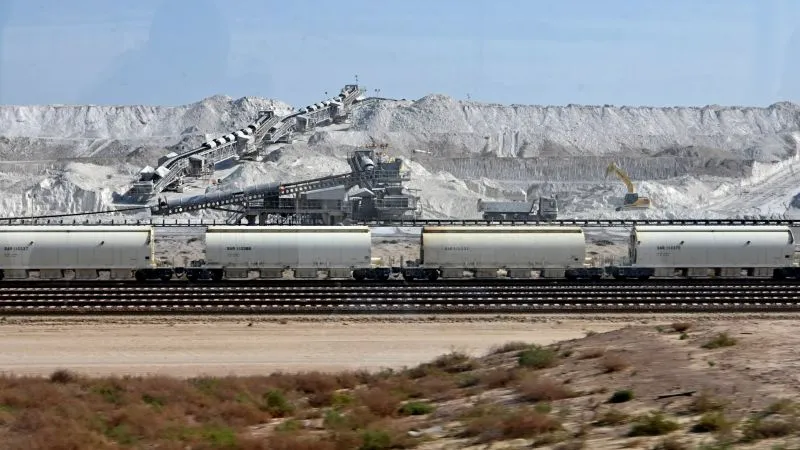
Saudi Arabia’s recent claim to mineral reserves worth an eye-catching £1.95 trillion signals a clear shift in its economic game plan. Long known for vast oil reserves, the kingdom is now moving into mining as part of Vision 2030, trying to diversify and cut its dependence on oil. That move could reshape global geopolitics, especially in the market for critical and rare earth minerals, which are vital for technologies like electric vehicles, AI and advanced military kit.
Digging up Saudi Arabia’s mineral wealth
The country’s mineral pile is varied: gold, zinc, copper and lithium all feature, and there are significant rare earth elements such as dysprosium, terbium, neodymium and praseodymium. These rare earths are needed for a range of technologies, from wind turbines and high-performance computing to electric cars. With such resources, Saudi Arabia is positioning itself as a major player in the global supply chain for critical minerals.
Saudi Arabia is pushing hard to wean its economy off oil. The Future Minerals Forum in Riyadh was used to announce faster mining licence approvals and cuts to bureaucratic and tax hurdles for mining investment. State-owned Maaden has pledged to put £85.8 billion into metals and mining over the next decade. Its plan includes international partnerships and attracting industry talent to beef up Saudi Arabia’s presence in the sector.
Who dominates rare earths globally
On the world stage, production and refining of rare earths is largely in China’s hands. The International Energy Agency says China produces over 90% of the world’s refined rare earths and more than 60% of mining output. That position has been built through decades of state-backed investment and partnerships. Geopolitical tensions around rare earths were highlighted when President Donald Trump announced a possible deal on mineral rights in Greenland, underlining how strategic these resources are.
Recent policy shifts have added further twists. Last year, China tightened export controls on heavy rare earths, many with military uses. Historically, the US mined its own heavy rare earths but relied on China for refining, showing how dominant China is in this space.
Domestic plans and global partnerships
Vision 2030 puts mining front and centre as a way to diversify the economy. The kingdom wants to build local supply chains (including for industries such as electric vehicle manufacturing) and has set ambitious targets. S&P Global reports Saudi Arabia plans to lift its budget for exploratory mining by 595% from 2021 to 2025 — although that still lags behind big mining countries like Canada and Australia.
International links are a big part of the strategy. On a state visit to Washington, Saudi Arabia pledged nearly £0.78 trillion of investment in US infrastructure, technology and industry. Part of that involves a tie-up with US firm MP Materials and the Pentagon to build a new refinery in Saudi Arabia, co-owned by MP Materials and the US Department of Defense (which would hold a 49% stake). Those deals show Saudi intent to plug into global markets and strengthen refining capacity.
Building a future processing hub
Growing infrastructure and plentiful energy give Saudi Arabia a leg up in becoming a regional refining hub, says Melissa Sanderson, co-chair of the Critical Minerals Institute. There’s scope for the kingdom to team up with African and Central Asian countries to process minerals more cheaply and with better environmental practices, potentially challenging China’s current role.
But there are hurdles. Developing integrated supply chains and processing facilities takes time, and industry figures such as Abigail Hunter warn the sector runs on long timelines. Logistical issues and diplomatic complications — especially given regional instability and mixed international relations — could slow Saudi plans.
Saudi Arabia’s move into mining is more than an economic play; it’s a wider geopolitical push to become a key global player. As the kingdom pours investment into mining and forges strategic partnerships, it could soon reshape its standing in the market for critical and rare earth minerals. The wider consequences touch the global supply chain and the geopolitical balance in mineral-rich areas.