While drifting through space, a Chinese taikonaut caught a mysterious sound no one should ever hear
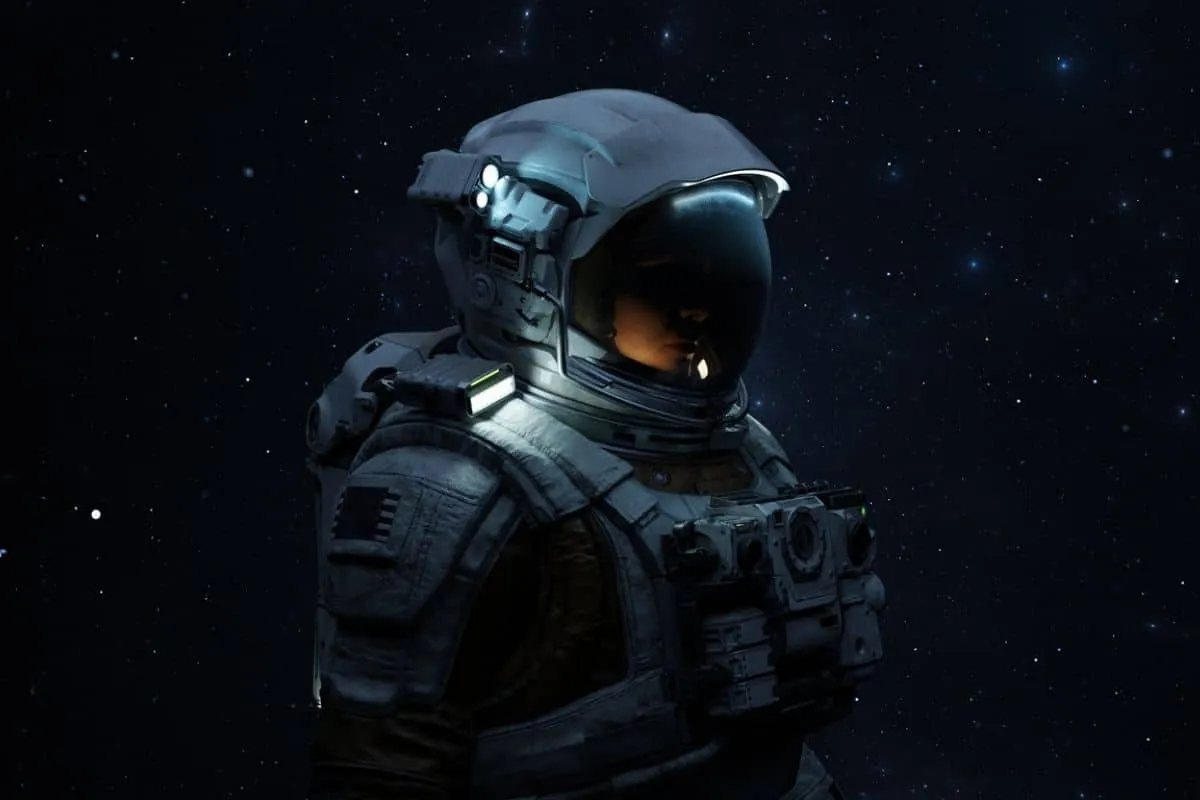
More than twenty years ago, something odd happened that still has scientists scratching their heads. During a landmark mission in 2003, China’s first man in space, Yang Liwei, said he heard a strange knocking while in orbit. He told the BBC it sounded like “someone hitting the hull, like striking an iron bucket with a wooden hammer.” The noise remains unexplained and challenges what we think we know about the quiet of space.
Odd knocking out in the void
Yang reported the sound while orbiting hundreds of kilometres above Earth. What makes it strange is that, by basic physics, sound waves can’t travel through a vacuum because there’s no medium—no air, water or solid—to carry them.
Engineers inspected the spacecraft and found no signs of damage or any strike. Yang eventually learned to live with the mysterious noise and came to call it a “normal phenomenon.” Chinese media have since reported that other taikonauts (Chinese astronauts) on missions in 2005 and 2008 also heard the same spectral knocking.
It wasn’t just a one-off for Yang. With no visible damage and no obvious cause, he often peered out of his window into space to see what might be making the sound—but saw nothing. The knock has since taken on a nickname: the “phantom knock.”
How people have tried to explain it
Various ideas have been floated. Professor Goh Cher Hiang, a space engineering specialist at the National University of Singapore, suggested that tiny bits of debris might have struck the spacecraft. Such micro-debris can travel extremely fast and could, in theory, pierce metal. But there’s no hard evidence for this, so the idea remains speculative and hard to prove.
Another line of thought comes from Professor Wee-Seng Soh, also in Singapore. He thinks the sound could come from the hull expanding or contracting as the craft moves through extreme temperature changes—essentially the metal flexing and making noise. It’s a plausible suggestion, but again it hasn’t been confirmed.
From mystery to a bit of a tradition among crews
Over time the phenomenon has turned into a kind of rite of passage for Chinese astronauts. Yang often tells newcomers not to be alarmed if they hear the knock, and Chinese media quoted him as saying, “Don’t be alarmed if you hear it—it happened to me too.” Gradually, the phantom knock has gone from a baffling anomaly to a behavioural norm on Chinese space missions.
Still an unsolved mystery
Despite the theories from people like Professor Goh and Professor Wee-Seng Soh, nobody has produced solid proof of what causes the sound. The mystery is unresolved, showing that even as technology improves, space exploration still throws up strange, unanswered events.
The story of this mysterious knocking is more than a curiosity; it highlights how little we sometimes understand about the workings of space and fuels efforts for further study. Until someone finds a clear explanation, the phantom knock will keep grabbing the imagination of scientists and space fans alike.